Thanksgiving Gnomes: A Designer’s Real-World Embroidery Review
First Impressions: Playful, Festive, and Instantly Recognizable
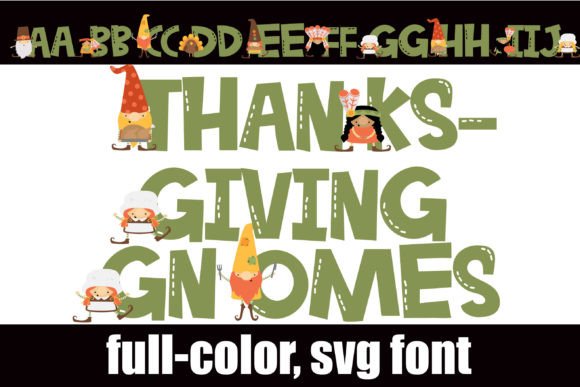
When I opened Thanksgiving Gnomes, my first thought wasn’t “cute font”—it was “this feels like a finished embroidered product already.” The uppercase letters each feature a full-color gnome—think rosy cheeks, pilgrim hats, tiny cornucopias, and cheerful expressions—all built into the letterforms themselves. There’s no lowercase set, which tells me this design was made for impact, not subtlety. It’s a Color Fonts release, so the gnomes aren’t outlines waiting for your interpretation—they’re pre-colored, ready-to-stitch personalities. That changes everything for embroidery planning.
A Real Project Test: Custom Tote Bags for a Local Boutique
Last week, I used Thanksgiving Gnomes to embroider “GIVE THANKS” on a set of heavyweight cotton canvas totes for a small-town gift shop. Why this design? Because shoppers don’t pause to decode typography—they smile, snap photos, and reach for their wallets. The gnomes gave the phrase warmth and narrative. No extra appliqué or embellishment needed. But—and this matters—I didn’t jump straight to production. I stitched a test on scrap fabric first, using the same thread colors and stabilizer I’d use on the final bags. What stood out? The gnomes hold up beautifully at 3.5" wide, but shrink below 2.75". Tiny details like hat brims and pumpkin accents softened or vanished entirely in smaller hoop sizes. So while Thanksgiving Gnomes is bold and joyful, it’s not a one-size-fits-all solution.
Where It Shines (and Where It Needs Care)
Thanksgiving Gnomes excels in projects where personality and seasonal charm are the main selling points:
- Custom apparel: Sweatshirts, crewnecks, and denim jackets—especially with light-to-medium fabric texture. The gnomes read clearly against solid backgrounds.
- Holiday gifts: Pillow covers, tea towels, and baby onesies (on stable, non-stretchy weaves). Parents love whimsical, non-generic holiday themes.
- Boutique merchandise: Embroidered patches, aprons, and market totes. Customers associate the gnomes with handmade care—not mass-produced clip art.
- Digital product previews: As a digital embroidery file, it works well in printable mockups for Etsy listings. The color integration makes flat mockups feel alive.
But be thoughtful about placement and context:
- Avoid tight curves: Caps and curved hat bills compress detail. The gnomes’ facial features can blur or stitch unevenly without careful digitizing adjustments.
- Watch fabric choice: On thin or stretchy fabrics (like lightweight knits), stabilizer support is non-negotiable—or those cheerful faces will pucker or distort.
- Dark fabric demands contrast: Since the gnomes rely on color, stitching them on navy or charcoal requires high-contrast thread (e.g., bright orange beards on black fabric) to preserve legibility.
- Wash durability matters: Dense fill areas around gnome hats and bodies need balanced stitch density. Over-stitched sections can stiffen or crack after repeated laundering—test wash a sample.
Design Integrity Meets Customer Trust
As an embroidery designer who sells both finished products and digital assets, I pay close attention to how a design affects perceived value. Thanksgiving Gnomes elevates a simple phrase into something memorable—not just “Happy Thanksgiving,” but “a friendly gnome handing you gratitude.” That emotional resonance builds trust. Customers don’t buy fonts; they buy stories, warmth, and intention. When a client orders a personalized gift using this design, they’re not just getting letters—they’re getting a curated moment.
That said, professionalism hinges on execution. If the gnomes stitch poorly—blurred edges, inconsistent satin stitch sheen, or misaligned color blocks—it reads as rushed, not handmade. So I always check:
- Whether the embroidery file includes clean vector-based outlines (for manual edits if needed).
- If the stitch density supports both visibility and flexibility—no crunchy, board-like patches.
- How the design scales across different product types: does “GNO” work as a standalone chest logo? Does “THANKS” hold up on a narrow tea towel hem?
- Whether the licensing permits commercial use—critical for Etsy sellers and craft business owners reselling finished items.
Practical Notes Every Embroiderer Should Try Before Stitching
You don’t need fancy software to spot potential issues. Here’s what I do every time:
- Test on scrap fabric—same weight, weave, and dye lot as your final piece.
- Compare black-and-white mockups alongside full-color versions. If the shape loses its charm without color, reconsider placement or pairing.
- Check thread color contrast before loading the hoop. A beige gnome on tan fabric disappears fast.
- Review small corners and inner curves. Are there running stitches hiding in tight spots? Those often need manual cleanup.
- Confirm hoop size compatibility. This isn’t a 4x4”-only design—but pushing it into a 3x3” hoop sacrifices expression.
- Use tear-away + cut-away stabilizer combo on textured or loosely woven fabrics. Gnome details demand stability.
Fitting Into Your Creative Workflow
Thanksgiving Gnomes isn’t background music—it’s the main event. It works best when paired with clean, minimal supporting elements: a single leaf motif, a subtle border, or no extra decoration at all. As a Fonts asset, it bridges digital and physical design seamlessly—great for branding consistency across social graphics, packaging labels, and stitched goods. For Etsy sellers, it adds instant seasonality without needing custom illustration. For craft fair vendors, it turns basic cotton napkins into conversation starters.
It won’t replace a classic serif for formal wedding gifts or monogrammed linens. But for handmade product lines that celebrate joy, tradition, and approachability? Thanksgiving Gnomes earns its place—not as filler, but as a considered, confident design choice.