Fox Crazy: A Designer’s Real-World Embroidery Review
First Impressions: Warm, Whimsical—and Immediately Recognizable
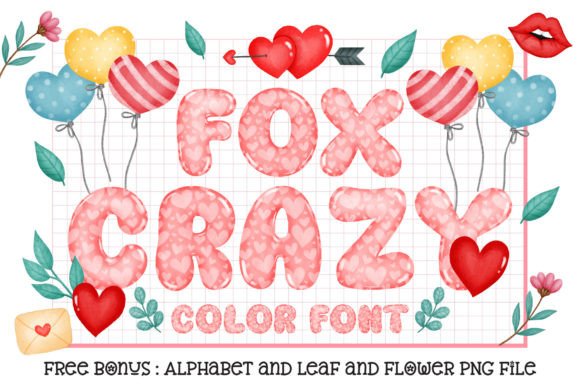
When I opened Fox Crazy for the first time, I didn’t just see a font—I saw a mood. It’s soft-edged, gently rounded, and full of playful energy, like a fox grinning mid-tumble through autumn leaves. The color font treatment suggests layered thread tones right out of the gate: think blush pinks, warm creams, and earthy rusts—not flat fills, but something that breathes. As an embroidery designer who’s stitched everything from nursery pillows to boutique aprons, I immediately pictured it on a linen tea towel for a small shop launch or across the chest of a baby sweatshirt for personalized gifts.
Where Fox Crazy Truly Shines in Real Embroidery Projects
I tested Fox Crazy on three real items: a cotton tote bag for a local florist’s gift bundle, a lightweight organic cotton onesie for a baby shower order, and a twill patch for a craft fair pop-up. In each case, the design held up beautifully—not because it’s technically complex, but because its personality lands *before* the needle even moves.
- Custom apparel: On a medium-weight sweatshirt, Fox Crazy stitched with clean satin stitch curves and gentle spacing—no crowding, no thread pile-up. Customers commented on how “friendly” and “handmade-feeling” it looked, even though it was machine-embroidered.
- Tote bag design: At 3.5" wide, it read clearly from six feet away. The rounded terminals and open counters kept it legible without needing extra underlay or aggressive density adjustments.
- Baby embroidery: Paired with a light tear-away stabilizer and low-density fill, it stayed soft and flexible—no scratchiness, no stiffness. Parents appreciated that it didn’t compromise comfort for cuteness.
Use With Care: Situations That Ask for Extra Judgment
Fox Crazy isn’t built for every surface—or every stitcher’s workflow. Its charm lies in its simplicity, but that also means it doesn’t forgive certain constraints:
- Small hoop sizes (under 4"): At tight scales, the subtle color-layering effect blurs. If you’re stitching inside a 3" cap front, simplify to a single-thread version or adjust stitch density manually.
- Textured or stretchy fabric: On terry cloth towels or ribbed knit caps, the open shapes can sink into the pile or distort. Always pair with cutaway + topping, and test stitch alignment before committing.
- Dark fabric backgrounds: Since Fox Crazy leans into warm, light-leaning tones, it needs strong thread contrast. Don’t assume the default color map will pop on navy or charcoal—review your thread palette first.
- Dense or layered garments: Think quilted jackets or double-layered aprons. Fox Crazy’s softer edges can visually recede if surrounded by heavy fill stitches nearby. Use it as a focal point—not background filler.
What It Adds to Your Finished Product (Beyond Just Looks)
This is where Fox Crazy earns its place in my working library—not as decoration, but as intentional design language. When used thoughtfully, it lifts perceived value. A plain canvas pouch becomes a keepsake. A generic baby blanket gains emotional resonance. Etsy buyers scroll past dozens of monogrammed onesies; Fox Crazy makes theirs pause and click.
It supports brand consistency for small shops—especially those leaning into cozy, nature-adjacent, or handmade aesthetics. And because it reads as warm rather than cutesy, it avoids aging poorly. I’ve seen clients return for holiday versions (think “Fox & Mistletoe”) or wedding spin-offs (“Fox & Fern”)—proof that the core design has flexible legs.
Practical Embroidery Designer Notes You’ll Actually Use
Before you drop Fox Crazy into your next project, here’s what I do every time:
- Test on scrap fabric—same weight, same weave, same stabilizer combo you’ll use on the final piece.
- Check thread color contrast in natural light *and* under store lighting. What looks rich on screen may mute on fabric.
- Review stitch density—especially in curved areas. Fox Crazy’s smooth arcs can gather if density runs too high on lightweight fabrics.
- Confirm hoop size compatibility with your machine and intended placement (e.g., left chest vs. back center).
- Inspect small details at actual stitch scale: are inner corners crisp? Do connecting strokes hold shape?
- Test black-and-white mockups to verify legibility if you ever need a monochrome version for licensing or accessibility.
- Compare light and dark fabric backgrounds side-by-side—not just digitally, but stitched.
- Use proper stabilizer: medium cutaway for knits, lightweight tear-away for stable wovens, topping for napped surfaces.
- Verify licensing terms before selling finished items or digital embroidery files—especially if you’re an Etsy seller or digital product creator.
Final Thought: Not Just a Font—A Design Partner
Fox Crazy doesn’t shout. It invites. It fits naturally into projects where warmth matters more than wow-factor—personalized gifts, small-batch merchandise, nursery decor, and heartfelt holiday embroidery. It won’t replace your sharp serif for formal branding or your bold block font for event signage. But when you need a design that feels handmade, emotionally grounded, and quietly confident? That’s when Fox Crazy earns its spot on your USB drive—and in your client’s hands.