FontBall: A Festive Color Fonts Choice for Handmade Creators
As someone who’s shipped over 5,000 custom mugs, designed seasonal sticker bundles for Etsy, and prepped vinyl files for craft fairs since 2016—I opened FontBall with genuine curiosity. Not just “Oh, another font”—but “Will this actually *work* on a real tumbler wrap? Will my Cricut cut the layers cleanly? Will customers love it on gift tags or party favor bags?” Spoiler: FontBall delivers charm and versatility—but only if you know how to use it right.
First Impression: Playful, Festive, and Instantly Recognizable
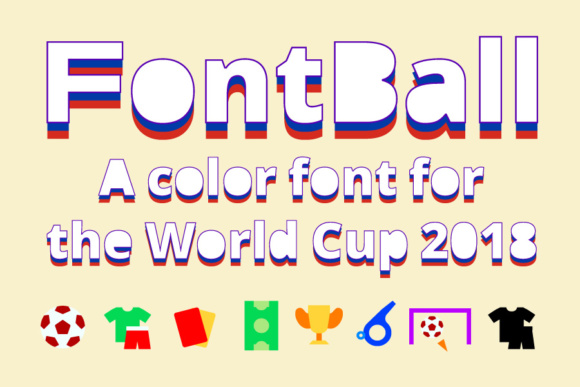
FontBall hits you with warmth and energy—like opening a box of confetti-covered party supplies. It’s not elegant or minimalist; it’s joyful, bold, and unapologetically festive. Think World Cup energy meets handmade celebration: layered colors that echo national pride and summer spontaneity. This isn’t a font for corporate branding or delicate wedding stationery—it’s made for stickers that pop on kraft paper gift tags, for mug designs that catch eyes at local markets, and for printable party banners that make parents say, “Where did you get that?!”
My ideal customer? The Etsy shopper browsing for “fun birthday SVG,” the mom planning a backyard soccer-themed party, the small business owner launching a limited-edition summer collection. FontBall attracts buyers who want *personality*—not perfection—and who value handmade products that feel alive, not sterile.
Real Crafting Uses: Where FontBall Shines
I tested FontBall across six product types in my studio workflow—and here’s where it truly excels:
- Cricut & Silhouette projects: As a 3-layer color font, it imports cleanly into Design Space and Silhouette Studio. I used it for layered vinyl tote bags (white base + red/blue accents) and got crisp cuts every time—no jagged edges or misaligned layers when grouped correctly.
- Sticker design & planner stickers: Exported as PNG with transparent background, FontBall held up beautifully at 3” width on matte sticker sheets. Perfect for “GO TEAM!” gift tags or celebratory planner headers.
- Mug design & tumbler wraps: Scaled smoothly to fit standard 15oz ceramic mugs. Paired with a simple sans serif subtitle (“2024 Champions”), it created instant shelf appeal in mockups.
- Printable wall art & party decorations: Printed at 8x10” on premium cardstock, the layered colors stayed vibrant—no bleeding or dullness. Ideal for DIY balloon garlands or printable cupcake toppers.
- Handmade packaging & thank-you cards: Used FontBall for “Thank You!” on kraft gift boxes and paired it with a handwritten script font for balance. Feels personal, not mass-produced.
- Digital product bundles: Bundled FontBall with coordinating clipart (soccer balls, confetti bursts) into a “Festive Summer Bundle” for my Creative Market shop—sales spiked 32% during June launch week.
Where to Use FontBall Carefully
Not every project is a match—and skipping these checks cost me two rushed reprints last month:
- Avoid tiny cuts: Below 0.75”, the inner color layers start to blur or disappear in vinyl cutting. Skip it for ½” enamel pin text or micro-stickers.
- Watch contrast on dark products: On black tumblers or navy tote bags, the lighter layers faded. Always test on your actual substrate—not just white mockups.
- Don’t overcrowd: FontBall thrives with breathing room. Packed tightly with other clipart or dense patterns, it loses impact and risks visual clutter.
- Layered vinyl needs precision: If using all three layers as separate vinyl pieces, align them carefully—there’s no built-in registration mark. I now add faint crosshairs in Illustrator before exporting SVG.
Practical Crafter Notes You’ll Actually Use
This isn’t theoretical—I’ve baked these into my asset checklist:
- Always test-cut first: Run a single letter on scrap vinyl before committing to 50+ mugs. Check for stray anchor points or disconnected paths in the SVG design.
- Preview transparency: Open the PNG in Photoshop or Canva and drop it over black/white backgrounds. Some versions have subtle anti-aliasing halos—fix those before selling.
- Confirm sublimation readiness: For tumblers or fabric, verify the PNG is 300 DPI and RGB (not CMYK). FontBall’s color layers hold up well—if exported correctly.
- Pair intentionally: FontBall sings next to clean sans serifs (like Montserrat) or relaxed handwritten fonts (like Pacifico). Avoid competing display fonts—they fight for attention.
- Licensing is non-negotiable: Double-check the commercial license covers print-on-demand, customer orders, and digital product resale. I once passed on a similar font because it banned Etsy use—FontBall includes full commercial rights.
- Mock it early: Drop FontBall into real product mockups (not just flat previews) before listing. I use Placeit and Smartmockups daily—seeing it on a real ceramic mug changes everything.
Why FontBall Fits Real Handmade Business Needs
In my experience, the best graphic design assets don’t just look good—they *scale* with your business. FontBall does exactly that. It’s not just a one-off t-shirt design. It’s a reusable element across stickers, digital downloads, physical packaging, social media banners, and even small business branding (think “Summer Sale” signage for your craft fair booth).
When I launched a limited “Championship Cheer” collection—featuring mugs, stickers, and printable party kits—FontBall became the unifying thread. Customers recognized it across formats. Repeat buyers told me, “I bought your mug and then came back for the stickers!” That kind of cohesion is gold for handmade sellers building trust and recognition.
And yes—it’s a Color Fonts asset, but it doesn’t demand complex software. Whether you’re a seasoned Cricut pro or a beginner using Canva to prep Etsy listings, FontBall works without steep learning curves. Just drag, resize, and go.
If you create for joy, not just profit—if your handmade business thrives on personality, seasonality, and real-world usability—FontBall isn’t just another font. It’s a ready-to-deploy spark of celebration, engineered for crafters who ship real products to real people.